Group 3 Members: Atinuke, Barbara, Sharonda, Dominik, Yavawn, Dunia
Please use this page to add your content, images, videos, links to additional content, and reference section.
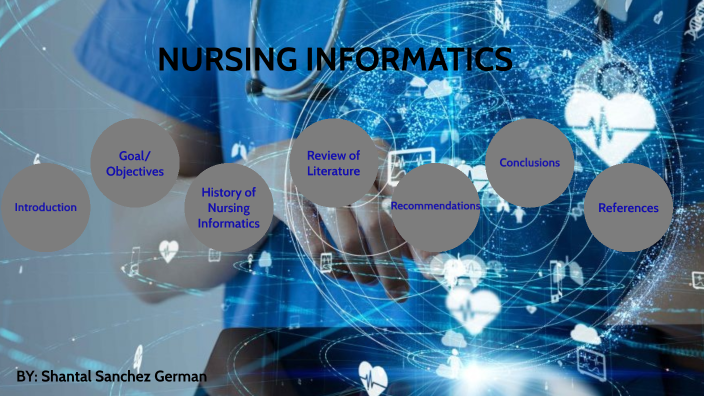
What is Nursing Informatics?
- Informatics is the application of informatic technology (electronic systems) to the specialties of science and art. This means that nursing informatics is specific to healthcare itself (Miller, 2025).
- It integrates the use of technology, such as computers, to manage and communicate data, information, and knowledge in nursing practice. It helps nurses make informed decisions to improve patient care and safety (Miller, 2025).
Why is Nursing Informatics Important?
- Improved patient safety
- Provides communication access to other healthcare workers
- Enhances the quality of patient care
- Support evidence- base practice through access to current research and clinical guidelines
Application of Nursing Informatics to Clinical Practice:
4 Informatics Examples and Applications
- An example of nursing informatics being used in the hospital setting is when nurses use the electronic health record (EHR) to collect and manage patient information. Nurses can document their findings and read through inpatient/ outpatient notes. Orders can be reviewed and communication can occur with other healthcare professionals.
- Clinical Decision Support systems deliver evidence based guidelines and automated patient alerts directly at bedside to minimize medical errors and to enhance clinical decision-making. CDSS offer multiple benefits that support nursing practice while improving patient care. For medication safety CDSS technology can generate alerts and reminders for medication based on the patient specific data. These alerts include drug interactions, medication allergies, dosage adjustments, and medication allergies. (Mielke,2025)
- Telemedicine and Telehealth systems expand care access via remote patient monitoring virtual check-ins, and digital health tracking. Telemedicine focuses on clinical diagnosis and treatment. Telehealth encompasses several services including remote monitoring, patient education, and virtual consultations. Wearable technology and remote patient monitoring. Virtual health care optimizes resources by reducing unnecessary hospital visits and emergency room admissions. Both services provide secure and real-time video consultations. (Mielke,2025)
- Wearable Technology and Remote Patient Monitoring systems are devices that patients wear and the tech sends data to their provider for remote monitoring and analysis. Wearable health transfers can monitor vital signs, heart rate, blood pressure, respiratory rate, and oxygen saturation. Glucose monitoring enables patients with diabetes. Benefits are timely interventions, patient self-management, and reduces hospital visits. (Mielke, 2025)
Nursing Informatics, Data Analysis, and Evidenced-Based Practice
- Nursing informatics supports clinical practice by helping nurses collect, organize, and interpret patient data.
- Nurses are responsible for staying current in clinical practice by using evidence-based research and reliable professional resources.
- Nurses can maintain current knowledge by reviewing research literature, professional journals, clinical practice guidelines, continuing education, quality improvement projects, and professional networking.
- Informatics supports evidence-based practice by helping nurses access current research, electronic resources, guidelines, and patient education tools.
- In clinical practice, nurses combine patient data, nursing judgment, and evidence-based information to make safe decisions.
- Examples include reviewing blood pressure trends, monitoring abnormal lab results, using clinical decision support alerts, and applying evidence-based triage protocols.
Reliable Nursing Research Databases
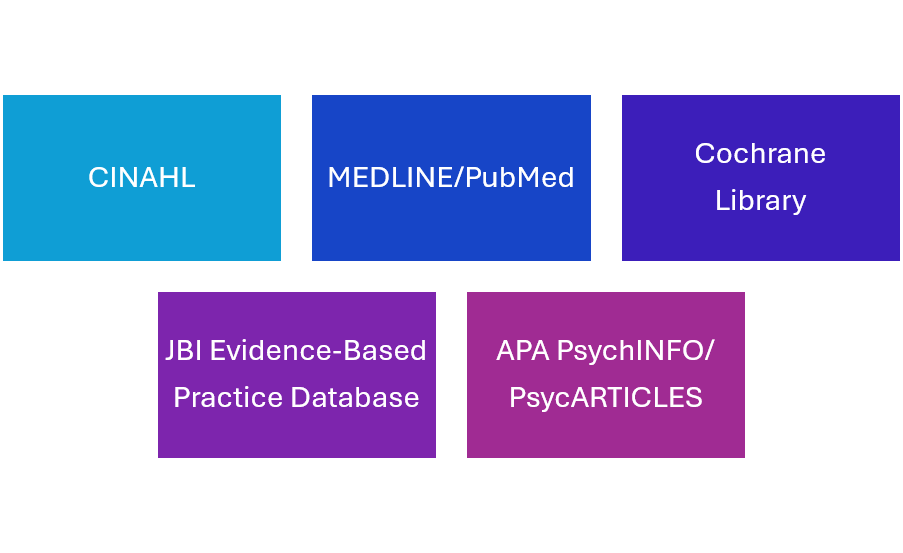
(Miller, 2025)
Professional Use of Social Media in Nursing
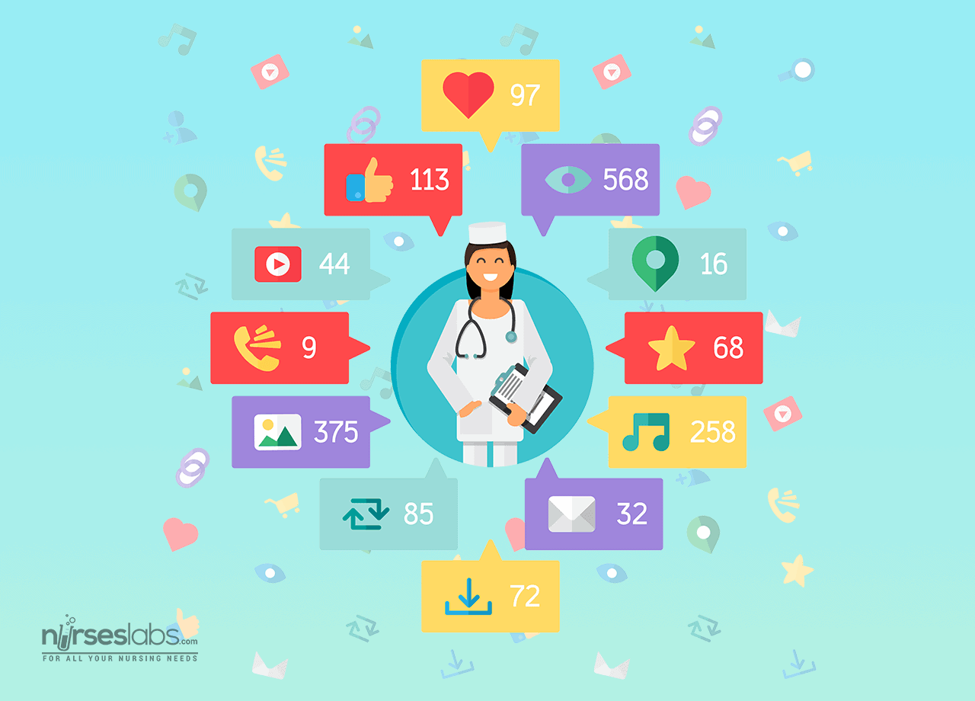
Social media is one of the key forms of communication and education for nursing informatics. Social media platforms are used by nurses to gain access to research-based resources, engage in professional educational practices, interact with other nurses, and spread health-related content. Social media can be used responsibly for professional development, according to previous research (Rukavina et al., 2021).
Benefits of Social Media in Nursing
- Contributes to improved communications and collaboration between nurses and other healthcare professionals and speedy availability of evidence-based studies and clinical guidelines (Rukavina et al., 2021).
- Assists in educating patients on health information and preventing diseases.
- Contributes to nurses being updated about healthcare innovations and membership in professional associations and online communities (Rukavina et al., 2021).
Risks of Social Media Use
- Publishing patient information is a breach of the patient’s privacy and confidentiality laws like the HIPPA.
- The dissemination of false or unverified health information can be detrimental to the patient’s treatment (Robert et al., 2024).
- The nurse’s professionalism may be compromised by engaging in improper activities online.
- The acceptance of friend requests or communication through personal social networking sites with the patient may result in mixing up the lines of professionalism.
- Information posted online stays online forever, even if deleted (Robert et al., 2024).
Best Practices for Nurses
- Protect patient confidentiality by never sharing identifiable patient information.
- Follow employer policies and professional guidelines regarding social media use.
- Verify the accuracy of health information before posting or sharing it.
- Maintain professional boundaries when interacting with patients online.
- Use social media to promote evidence-based practice, health education, and professional collaboration.
Additional Links
https://www.hipaajournal.com/hipaa-social-media
https://www.hhs.gov/hipaa/for-individuals/guidance-materials-for-consumers/index.html
Artificial Intelligence (AI) in Nursing Informatics
Artificial intelligence (AI) is becoming an important tool in healthcare and nursing informatics. AI can analyze large amounts of patient data, identify trends, and assist healthcare providers in making timely clinical decisions. AI does not replace the nurse’s clinical judgment but serves as a decision-support tool to improve efficiency and patient safety.
Examples of AI in nursing include:
- Predicting patients at risk for sepsis or clinical deterioration.
- Identifying patients at high risk for falls or pressure injuries.
- Assisting with staffing and patient acuity assignments.
- Supporting clinical documentation through voice recognition and automated charting.
Nurses play an important role in ensuring AI is used ethically, accurately, and in ways that support patient-centered care rather than replacing human decision-making (American Nurses Association, 2025).
Cybersecurity in Healthcare
One topic becoming increasingly important in nursing informatics is cybersecurity. Because healthcare organizations store large amounts of electronic patient information, they are frequent targets for cyberattacks such as ransomware, phishing emails, and data breaches.
Nurses contribute to cybersecurity by:
- Creating strong passwords.
- Logging out of electronic health records when not in use.
- Recognizing phishing emails.
- Protecting patient information.
- Reporting suspicious computer activity immediately.
Strong cybersecurity practices help protect patient privacy and maintain trust in electronic healthcare systems.
Benefits of Nursing Informatics
- Improves patient safety by reducing medication and documentation errors.
- Enhances communication among interdisciplinary healthcare teams.
- Supports evidence-based practice through access to current research.
- Improves workflow efficiency and reduces duplicate documentation.
- Facilitates quality improvement initiatives using clinical data.
- Increases patient engagement through patient portals and telehealth technologies.
References:
- Life, I. (2020). What is Nursing Informatics? In YouTube. https://www.youtube.com/watch?v=Mh3d-rSaAOM
- Mielke, J. (2025, July 5). What is nursing informatics? Nursing.org.
- Miller, K. (2025). Informatics and nursing: Opportunities and challenges (7th ed.). Wolters Kluwer.
- Robert, A John Camm, Aguiar, C., E Biassin, G Breithardt, Bueno, H., Drossart, I., Hoppe, N., E Kamenjasevic, R Ladeiras-Lopes, P McrGreavy, Lanzer, P., R Vidal-Perez, & Bruining, N. (2024). Risks and benefits of sharing patient information on social media: A digital dilemma. European Heart Journal, 5(3). https://doi.org/10.1093/ehjdh/ztae009
- Rukavina, T. V., Viskic, J., Poplasen, L. M., Relic, D., Marelic, M., Jokic, D., & Sedak, K. (2021). Dangers and benefits of social media on e-professionalism of healthcare professionals: Scoping review. Journal of Medical Internet Research, 23(11). https://doi.org/10.2196/25770
- U.S. Department of Health & Human Services. (2025). Health Industry Cybersecurity Practices.
Attachments
| File | Size | Added |
|---|---|---|
| image | 12 KB | Jul 19, 2026 |
| image | 12 KB | Jul 19, 2026 |
| image_2026-07-16_010300627 | 295 KB | Jul 15, 2026 |
Leave a Reply