Group 11 Members: Maressa, Caresse, Charles, Gavin, Danielle, Sarah U., Madison
Nursing Informatics
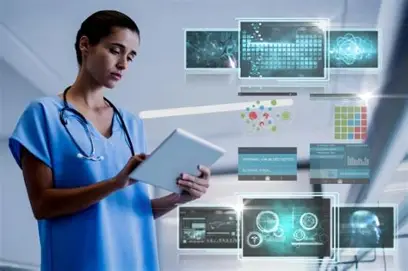
First, what is informatics?
Informatics is defined as the use of information technology (IT) and applying it to the arts and sciences. In healthcare, this means healthcare workers can communicate, handle, document, store, and analyze patient health information. Healthcare informatics has many specialties, including nursing informatics (Miller, 2024).
What is nursing informatics?
Nursing informatics (NI) is defined as the use of computer technology in the application of nursing education, research, and services. A vast array of IT programs and platforms are specific to nursing and healthcare delivery. This page explores many forms of nursing informatics that improve how nursing care is delivered and how efficiently it is delivered (Miller, 2024).
Nursing informatics in a practical sense is the ability to have, “digital literacy,” that is the ability to us electronic health records (EHR)and other NI tools in a competent way in the ever evolving and expanding health care environment. (Reid, et al., 2026)
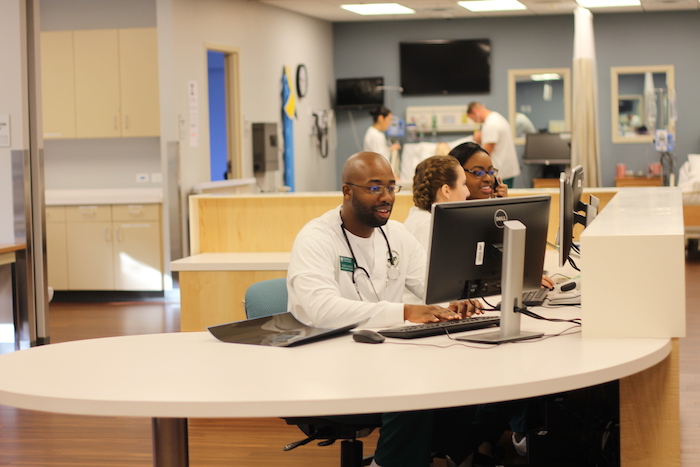
Overview video:
This short video explains how the healthcare team, technology, and other healthcare processes work together to make patient information useful in everyday care. It highlights skills nurses need, including evaluating health information, using electronic records, and protecting patient privacy. (Nursing Informatics, 2020).
Roles in Nursing informatics:
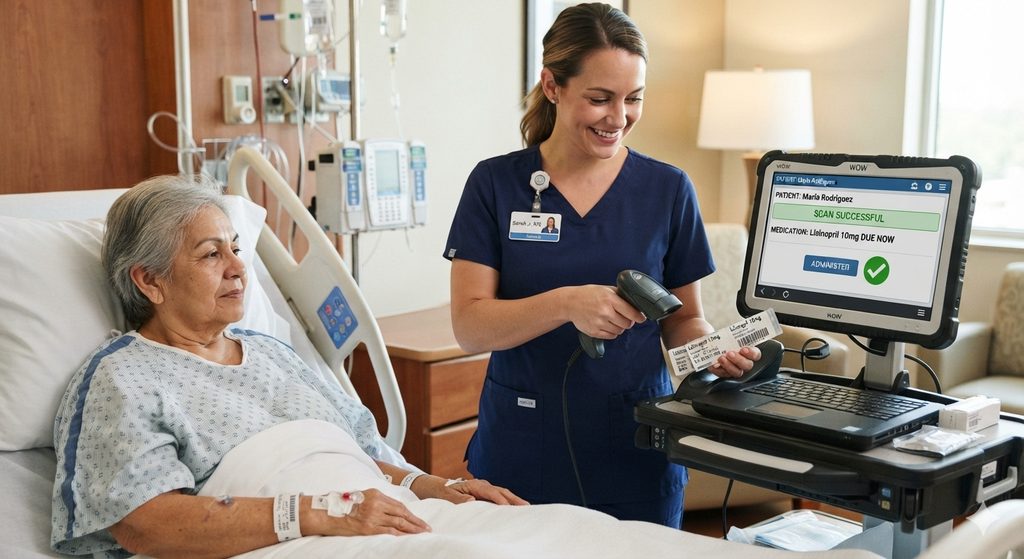
Nursing informatics includes many roles, including:
Nursing Informatics Specialist
Clinical Informatics Specialist
Clinical Analyst
Director of Clinical Informatics
Nurse Educator/Instructor
Consultant
Chief Nursing Informatics Officer
Academia/Professor
(Miller, 2025)
Some of these titles require certification and/or a graduate-level degree. However, one may begin a journey into this career simply by becoming a “super user”. Having bedside nursing experience is vital as feedback is crucial as many programmers and IT personal cannot relate to the user experience at bedside. (Miller, 2025)
More information on types of nursing informatics roles: https://www.nursing.umaryland.edu/academics/grad/nursing-informatics/careers/
The Value of Nursing Informatics:
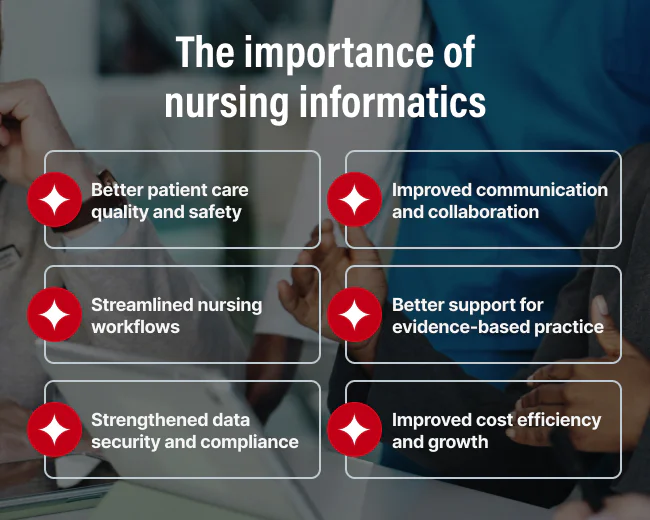
Through nursing informatics, nurses have a role in shaping how healthcare technology is designed and used. Their experience caring for patients helps them identify what information the care team needs and how to make it easier to find. This input helps organizations design systems that better support the care teams work (American Nurses Association, 2023).
Nursing informatics plays a vital role in healthcare. As the largest group in healthcare, nurses have a significant impact on patient outcomes and care. By utilizing advances in this field, nurses can quickly assess important patient data, provided focused assessments, decrease errors, support evidence based practice and promote patient safety(Reid, et al., 2026)
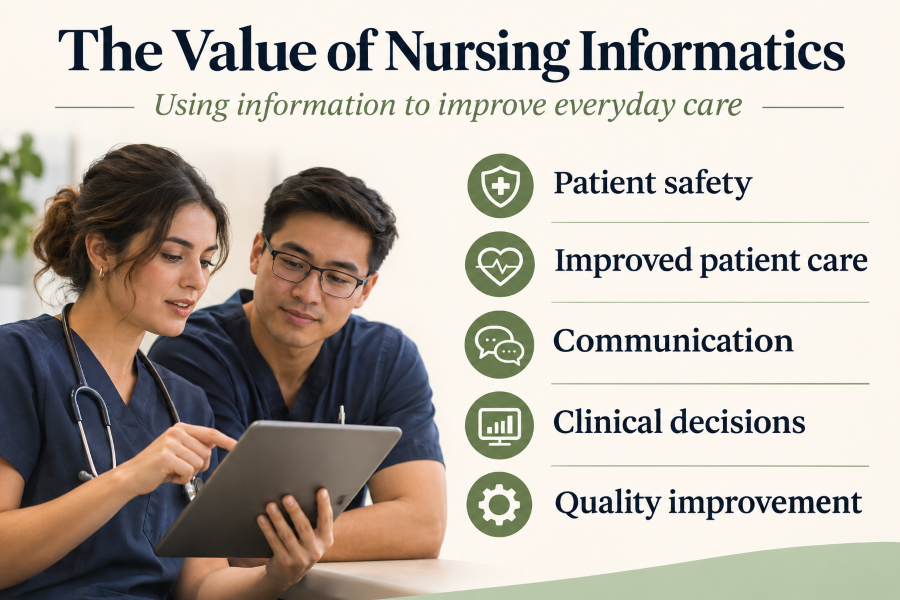
Common Applications:
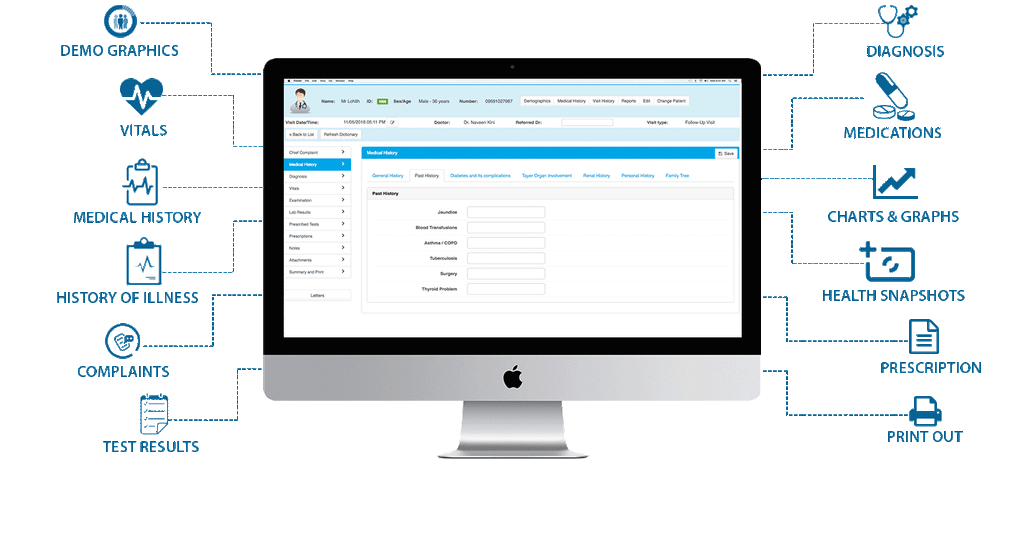
Electronic Health Records
Nurses utilize EHRs to document care and find the information they need, such as recent assessments, medication lists, lab results, and critical findings. Patient information in one place helps the care team stay up to date (Miller, 2025). In practice: Before entering in with a patient, a nurse can review the previous note to see what needs follow-up.
Telehealth
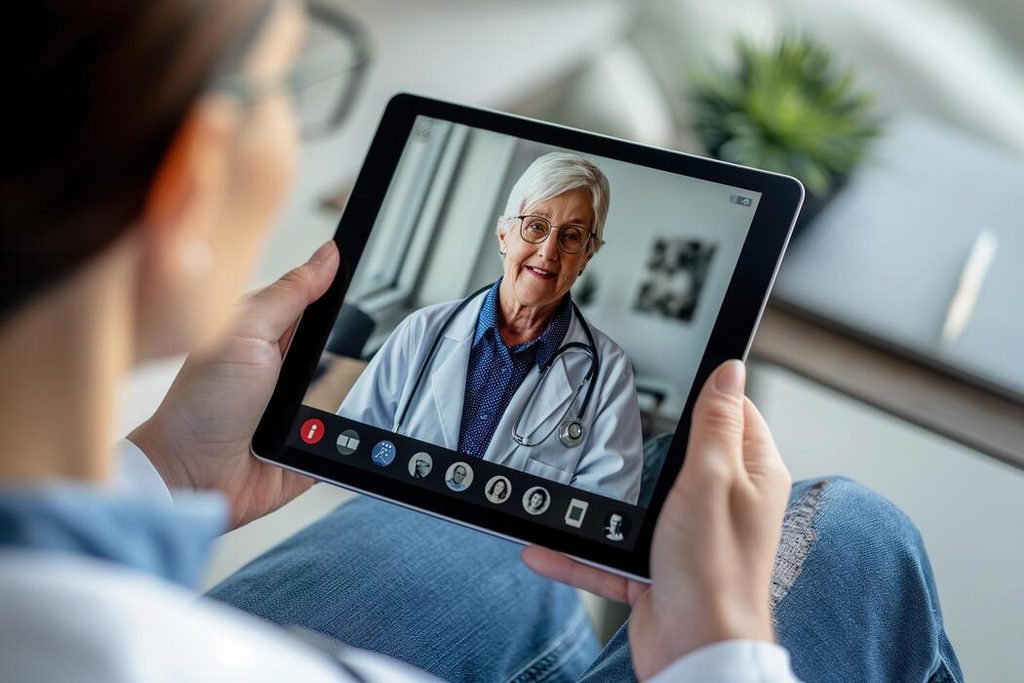
Telehealth allows healthcare members to connect with patients when they cannot meet in person. This can include a live video visit or information a patients sends for the care team to review later (Miller, 2025). In practice: During a video call, a nurse can review education and give the patient a chance to ask questions from home.
Wearable technology
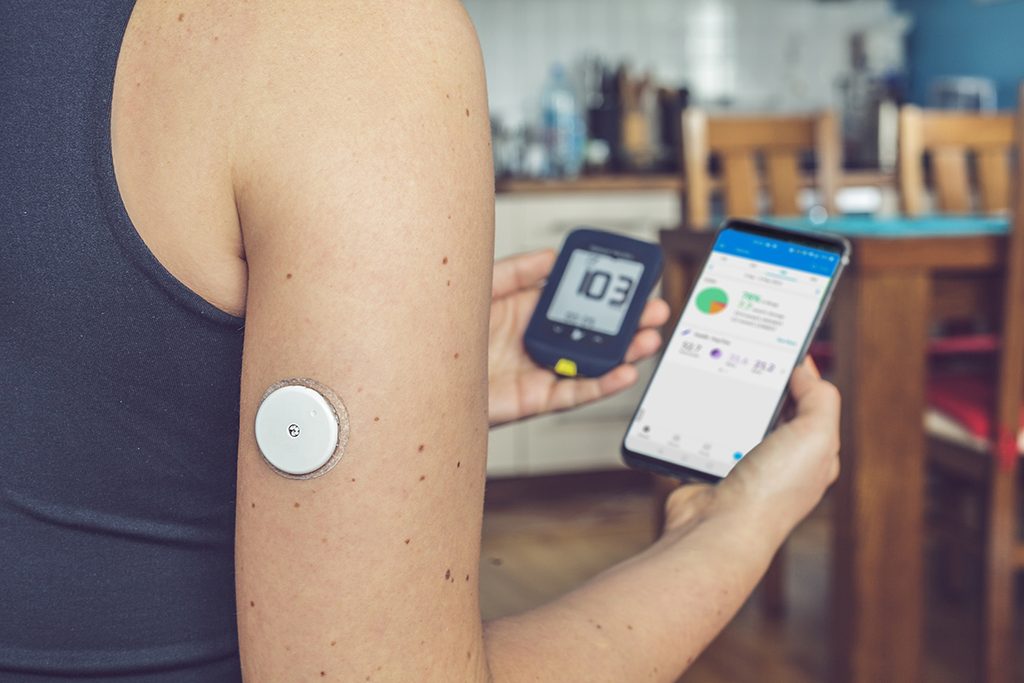
Wearable technology collect health information as people go about their day. A smart watch can track activity and heart rate, while a wearable glucose monitor can show how glucose levels change throughout the day (Miller, 2023).
Click this link for a video overview of Electronic Health Records: https://www.youtube.com/watch?v=W0w31NPCu0g
Real world careers in nursing informatics:
- Nursing Informatics Specialist
- Clinical Information Specialist
- Clinical Analyst
- Nurse Educator
- Consultant (Miller, 2025, pp222-225)
- Nursing Informatics Specialist: A nursing informatics specialist combines nursing knowledge with computer and information technology skills to improve healthcare systems. They help implement electronic health records (EHRs), improve documentation processes, and ensure technology supports safe and effective patient care (Miller, 2025).
- Clinical Information Specialist: A clinical information specialist helps manage and organize patient information within healthcare information systems. They ensure clinical data is accurate, accessible, and useful for healthcare providers when making decisions about patient care (Miller, 2025).
- Clinical Analyst: A clinical analyst evaluates healthcare information systems and analyzes clinical data to identify areas for improvement. They work with healthcare professionals and information technology teams to make sure systems meet clinical needs and support quality patient outcomes (Miller, 2025).
- Nurse Educator: A nurse educator provides training and education to nurses on how to properly use healthcare technology and information systems. They help nurses develop the skills and knowledge needed to use electronic documentation, clinical applications, and other technologies effectively (Miller, 2025).
- Consultant: A nursing informatics consultant provides professional guidance to healthcare organizations regarding technology and information systems. They help identify problems, recommend improvements, and assist with implementing technology that improves workflow and patient care (Miller, 2025).
Listed above are examples of different types of roles within the world of Nursing Informatics. These roles all change the clinical experience for nurses and patients alike, from data analysis, improvements within the EMR to software applications that improve clinical outcomes (Miller, 2024).
Please consider what a day looks like in nursing informatics.
History of Nursing Informatics:
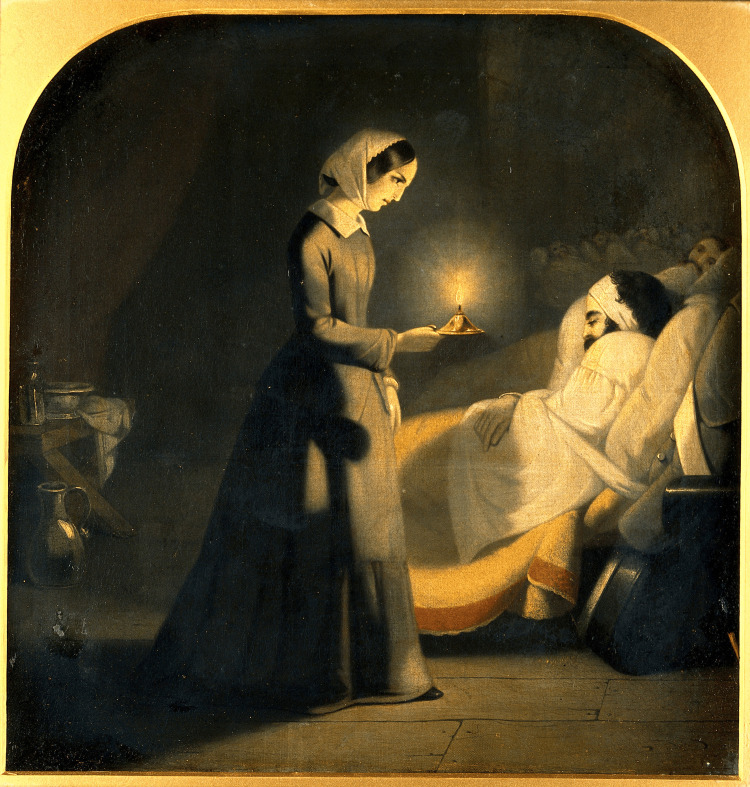
- 1850s: Florence Nightingale used statistics and patient data to improve healthcare quality and patient outcomes (Miller, 2024).
- 1950s–1960s: Computers were introduced into healthcare to help organize patient information and manage administrative tasks (Miller, 2024).
- 1970s: Early nursing computer systems emerged to support patient care planning, scheduling, and documentation (Miller, 2024).
- 1980s: Nursing informatics expanded, with increased attention to standardized nursing terminology and data collection (Miller, 2024).
- 1990s: The American Nurses Association officially recognized nursing informatics as a nursing specialty in 1992 (Miller, 2024).
- 2000s: Electronic health records and computerized documentation became increasingly common in healthcare (Miller, 2024).
- 2010s–Present: Telehealth, mobile technology, artificial intelligence, and electronic health systems continue to transform nursing practice (Miller, 2024).
Watch this video for a visualized history of nursing informatics and additional information: https://study.com/academy/lesson/video/history-of-nursing-informatics.html
Nursing Informatics and Public Health
- While many nurses focus on their current care and immediate consequences, nurses have the power to change outcomes in the future, and for large groups of people
- Nurses can give advice for lifestyle changes, and routine follow-ups based on their knowledge of patient conditions, and make recommendations that prevent further admissions. (Sindhu, 2025)
References
American Nurses Association. (2023, July 5). What is nursing informatics? https://www.nursingworld.org/content-hub/resources/nursing-resources/nursing-informatics/
Miller, K. S. (2024). Informatics and nursing: Opportunities and challenges (7th ed.). LWW.
Nursing Informatics. (2020, November 12). Nursing informatics overview [Video]. YouTube. https://www.youtube.com/watch?v=ub1ScYHH3GE
Reid, L., Button, D., Breaden, K., & Brommeyer, M. (2026). Nursing informatics and undergraduate nursing curricula: A scoping review. Nursing Reports, 16(2), 42. https://doi.org/10.3390/nursrep16020042
Sindhu. (2025, August 14). How nursing informatics addresses population health nursing. Worcester State University. https://online.worcester.edu/programs/nursing/msn-public-health/addresses-population-health-nursing/
Study.com. (n.d.). History of nursing informatics. https://study.com/academy/lesson/video/history-of-nursing-informatics.html
University of Maryland School of Nursing. (n.d.). Careers in nursing informatics. https://www.nursing.umaryland.edu/academics/grad/nursing-informatics
UnityPoint Health – Meriter. (2024, October 18). A Day in the Life of Clinical Informatics (Video). YouTube. https://www.youtube.com/watch?v=YvgE_k76rCs
Attachments
| File | Size | Added |
|---|---|---|
| {6883E241-3201-45B2-BDFC-9DC57795F51B} | 913 KB | Nov 6, 2026 |
| history of nursing informatics | 16 KB | Nov 5, 2026 |
| history of nursing informatics | 16 KB | Nov 5, 2026 |
| nursing2 | 740 KB | Nov 4, 2026 |
| IMG_7383-resize | 139 KB | Nov 3, 2026 |
Leave a Reply
You must be logged in to post a comment.