Group 6 Members: Miranda, Kenadee, Emily K, Cheryl K, Ashley K, Brittney L
What is Informatics?
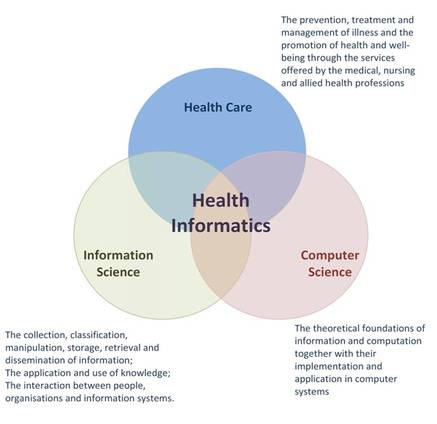
Nursing informatics connects the clinical side of healthcare with the technology side, helping translate patient data into usable information for care. According to the ANA, it combines nursing science, computer science, and information science to manage and communicate data in a way that supports clinical decisions-making and improves the overall care experience for both patients and providers (ANA, 2023).
Why Is Nursing Informatics Important?
Nursing informatics matters because nurses rely on accurate, accessible information to provide safe patient care. When information is organized and available when it is needed, nurses can spend more time focusing on patient needs and clinical decision-making.
Nursing informatics can contribute to:
- Improved patient safety
- Better communication among healthcare professionals
- More accurate documentation
- Improved access to patient information
- More efficient nursing workflows
- Quality improvement
- Evidenced-based practice
- Better Clinical decision making
- Improved patient outcomes
Benefits of Informatics
Informatics has many benefits in healthcare, including improving patient outcomes and safety by giving healthcare providers quick access to accurate patient information. It can also streamline workflow by making documentation and communication more efficient. Informatics supports research and quality improvement by using patient data to identify trends and improve care. It also makes virtual care possible, allowing nurses and other healthcare providers to communicate with and monitor patients remotely (ANA, 2023).
Cons of Nursing Informatics
Even though informatics has many benefits in healthcare, there are also some disadvantages. One major concern is patient privacy and confidentiality because so much patient information is store and shared electronically. This creates a risk of information being accessed by someone who should not have access to it or being accidentally shared. Technology can also be challenging for nurses if systems are difficult to use or require a lot of extra documentation. The ANA explains that as technology continues to grow in healthcare, nurses need to be aware of the risks to patient privacy and take steps to protect confidential information (American Nurses Association [ANA], 2024).
Nursing Informatics in Clinical Practice
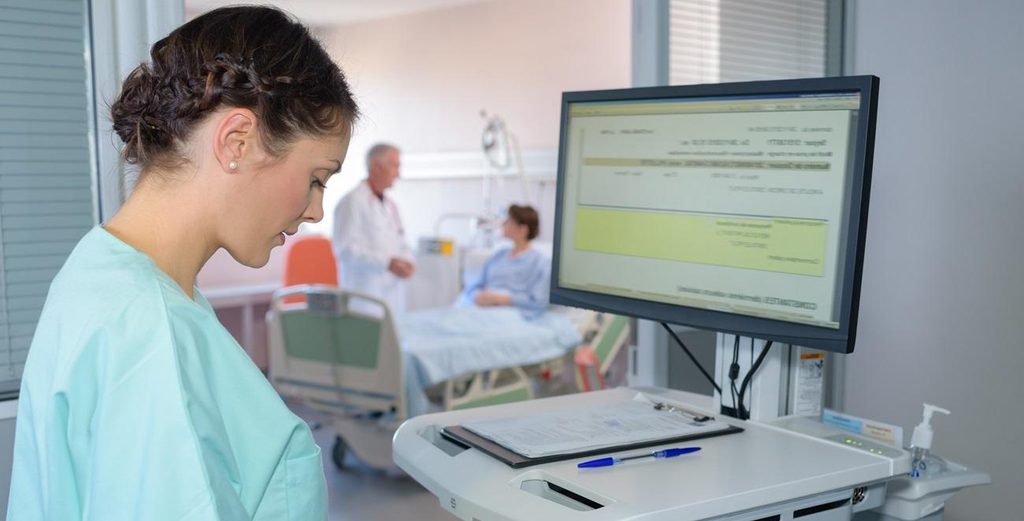
Nurses use informatics every day, even when they may not realize it. Electronic health records (EHRs), barcode medication administration, electronic medication lists, clinical decision-support systems, patient monitoring systems, and electronic documentation are all examples of informatics in practice.
For example, a nurse caring for a postpartum patient may use the EHR to review the patient’s medical history, allergies, medications, laboratory results, vital signs, delivery information, and previous nursing assessments. The nurse then uses this information to identify changes in the patient’s condition and determine what care is needed.
Another example is barcode medication administration (BCMA). Before administering a medication, the nurse scans the patient’s identification band and medication barcode. The system compares the medication with the patient’s electronic medication record. This provides an additional safety check and can help reduce medication errors.
Clinical decision-support systems are another important example. An EHR may alert a nurse about a medication allergy, abnormal laboratory result, potential drug interaction, or other patient-safety concern. The technology does not replace nursing judgment; instead, it provides information the nurse can consider alongside assessment findings and clinical knowledge.
Data, Information, Knowledge, and Wisdom
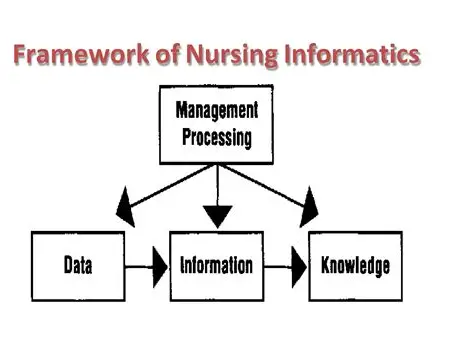
A major part of nursing informatics is understanding how data become useful information for clinical decision-making.
- Data: Individual facts or measurements, such as a patient’s temperature, blood pressure, oxygen saturation, or pain score.
- Information: Data that have been organized and placed into context. For example, several elevated blood pressure readings may show that a patient’s blood pressure is consistently high.
- Knowledge: Understanding what the information means and what nursing actions may be appropriate.
- Wisdom: Using knowledge, clinical judgment, experience, and patient-specific information to make the best decision for the patient.
This process is important because nurses do not simply collect information. They interpret it and use it to provide individualized care.
Examples of Nursing Informatics
Nursing informatics can be seen in many areas of clinical practice:
- Electronic Health Records (EHRs) – Nurses document assessments, interventions, medications, education, and patient responses electronically.
- Barcode Medication Administration – Technology provides an additional safety check before administering medications.
- Clinical Decision Support – Alerts and reminders provide information that can assist nurses with clinical decisions.
- Patient Monitoring Systems – Electronic monitoring can provide nurses with real-time information about a patient’s condition.
- Telehealth – Technology allows nurses to communicate with and assess patients remotely.
- Quality Improvement – Nurses can analyze patient data to identify trends, safety concerns, and opportunities to improve care.
- Patient Portals – Patients can access health information, communicate with healthcare providers, and participate more actively in their care.
- Electronic Communication – Secure electronic communication allows nurses and other healthcare professionals to share important patient information.
Privacy, Security and Confidentiality
- HIPAA
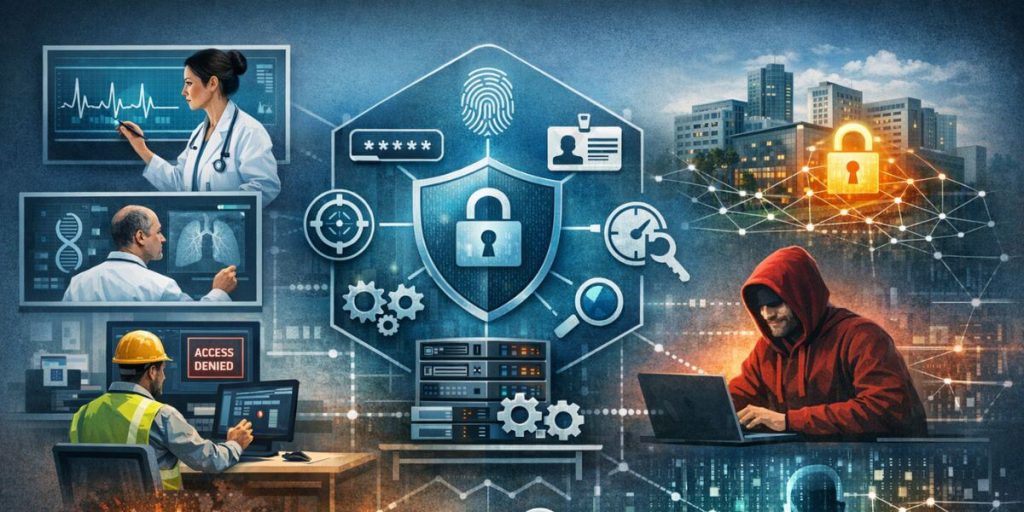
- Password and security
- It is imperative that users have unique IDs and use unique strong passwords.
- Never share their passwords with others.
- Use of multi-factor authentication (while frustrating does increase the security of the information).
- Lock their workstations when stepping away.
- Secure mobile devices
- Some organizations require the use of a lock or separate profile on the device in order to access their data.
- Protecting patient information
- This can include not only their patient’s name, address, insurance type, diagnosis, photo of them or parts of them, phone numbers, it can also include specific events that are specific to them.
- Social Media
- Presents a major issue in the potential for a HIPAA information breach purely because people frequently don’t think that one can connect what they post with the patients they are working with. Many people though share posts about their place of employment or have their place of employment listed on their profile. This makes it easier to connect the dots when people are posting things about patients, they have taken care of throughout their shifts.
- Cybersecurity
- As AI integrates into the world and healthcare it is becoming easier than ever to mimic or appear to be legit contacts/sites.
- Hacker: somebody who uses technology for unauthorized access to data
- Medjacking: hacking of medical devices with intent
- Malware: software that was designed to disrupt/damage a system
- Virus: type of malware, usually in an attachment, electronic file.
- Social engineering: tricking people into downloading malicious software
- Drive-by-download: occurs when a web includes malware
- Phishing: usually an email message with a link that when clicked installs malware
- Pharming: collecting personal information when the user clicks a specific link
- Ransomware: prevents the use of the device by locking out the user
- Virtual Private Network (VPN): private network used to allow communication between users in an organization
- Firewalls: a built-in defense to prevent hackers from being able to attack the network
- Antivirus software: programs used to identify potential malicious items that place the network at risk by hackers
- As AI integrates into the world and healthcare it is becoming easier than ever to mimic or appear to be legit contacts/sites.
- Additional Resources Link: https://pmc.ncbi.nlm.nih.gov/articles/PMC11723855
Nursing Informatics and the Nursing Process
| Nursing Process | How Informatics Helps |
|---|
| Assessment | Collects and organizes patient data |
| Diagnosis | Helps identify trends and potential problems |
| Planning | Provides information to develop an individualized plan |
| Implementation | Supports medication administration and documentation |
| Evaluation | Allows nurses to review patient responses and outcomes |
Informatics supports every step of the nursing process. Nurses collect patient data electronically, use that information to identify problems, plan care, document interventions, and evaluate patient outcomes.
Careers in Informatics
Clinical Analyst
Analysts work within the health systems to help improve workflow and comply with laws. They gather and store data. Analysts will document and report healthcare information. They also help train staff on any new updates with the computer equipment.
Nursing Informatics Specialists
NISs manage data to accurately use patient data for improvement of care. They design applications to improve informed decisions from patients and their healthcare team. These specialists upgrade and train staff for improvements and changes to the systems as well.
Director of Clinical Informatics
Clinical informatics directors and managers oversee healthcare systems and clinical data for healthcare facilities. They also design and maintain IT systems to improve the collection and management of data.
Chief Nursing Informatics Officer
Senior informatics officers that make and oversee the processes of information system in the healthcare systems. They use information technology and data to improve functions of the health management. They also oversee the training and compliance of staff using the technology.
References
American Nurses Association. (2022). Nursing informatics: Scope and standards of practice (3rd ed.). American Nurses Association.
American Nurses Association. (2024). Privacy and confidentiality.
American Nurses Association. (2023, July 5). What is Nursing Informatics and why is it so important? ANA. https://www.nursingworld.org/content-hub/resources/nursing-resources/nursing-informatics/
Healthcare Information and Management Systems Society. (n.d.). Nursing informatics. https://www.himss.org/
Miller, K. S. (2024). Informatics and nursing: Opportunities and challenges (7th ed.). Wolters Kluwer.
Nashwan AJ, Cabrega JA, Othman MI, Khedr MA, Osman YM, El-Ashry AM, Naif R, Mousa AA. The evolving role of nursing informatics in the era of artificial intelligence. Int Nurs Rev. 2025 Mar; 72 (1):e13084. doi:10.1111/inr.13084. PMID 39794874; PMICID:PMC11723855
Carlton, G. (2026, June 16). What can you do with a Nursing Informatics degree?. Nursejournal.org. https://nursejournal.org/careers/nurse-informatics/what-can-you-really-do-with-a-nursing-informatics-degree/
Leave a Reply
You must be logged in to post a comment.